
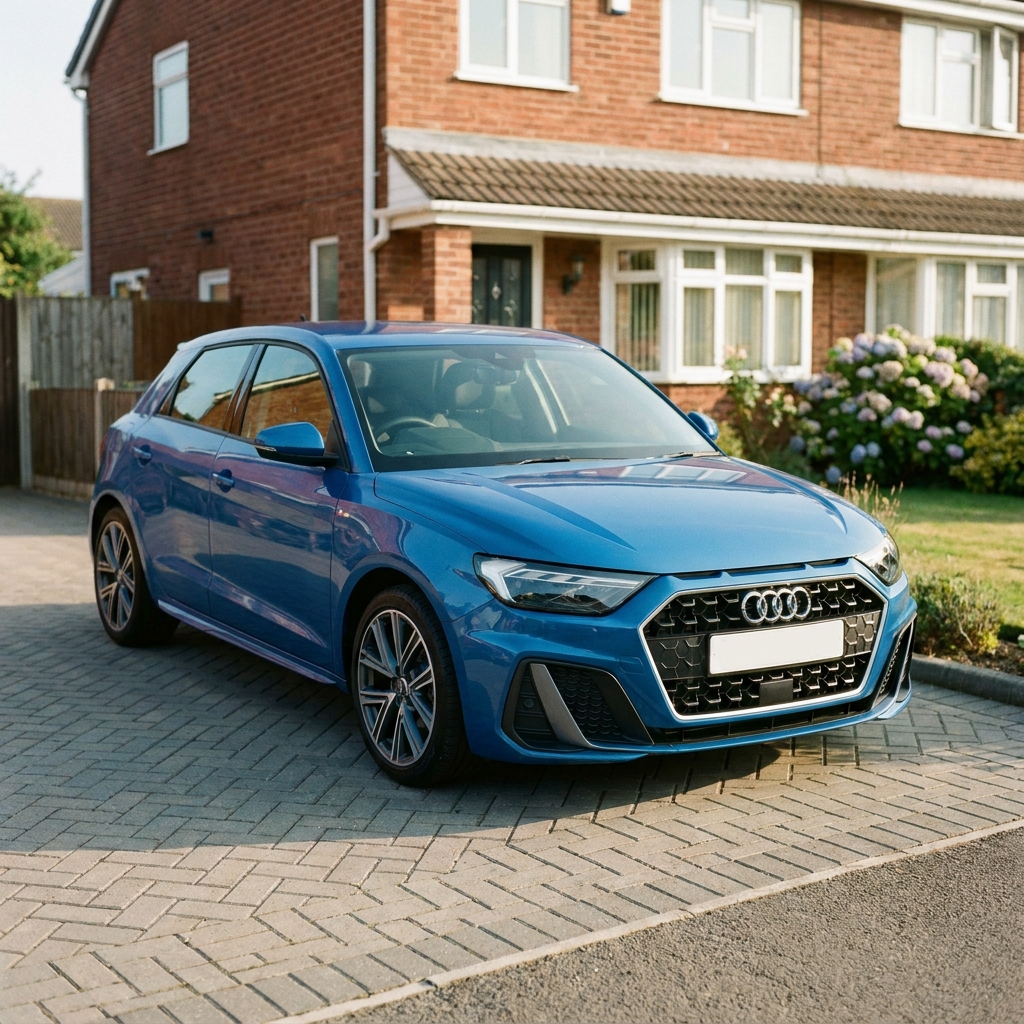
Audi A1 Finance Calculator: & APRs Explained
Financing an Audi A1? You've received the dealer's finance quote, but how do you know if it's competitive? It only becomes meaningful when compared to a genuine alternative, which is exactly the comparison most buyers never think to run.
Prefinance runs that comparison for you: we take the dealer's own finance example for the exact A1 you're looking at and compare it against the best available rate from our panel of finance brokers for that type of vehicle. On average, that turns up savings of up to 30% against dealer finance; though that's not a promise for yours, it's an average across many deals.
Across Audi finance generally, Prefinance customers have seen an average APR of 8.81% through our panel against a dealer average of 12.12%, working out to an average monthly saving of £59.26 and an average total saving of £2,738.09, based on 311 comparisons. Your savings depend on your credit profile, the lender, and the car you've chosen.
Audi A1 finance examples
Rates and calculations correct at time of posting but are subject to change.
Vehicle | Cash price | Deposit | Amount of credit | Term | Rep. APR | Monthly payment | GFV / Final payment | Monthly saving vs dealer | Finance type* |
|---|---|---|---|---|---|---|---|---|---|
2020 A1 40 TFSI S Line Competition (quoted 25 Apr 2026) | £16,990 | £1,000 | £15,990 | 48 months | 8.9% | £268.18 | GFV £7,471 | £47.24 | PCP |
2023 A1 30 TFSI 110 S Line (quoted 4 Apr 2026) | £20,990 | £5,150 | £15,840 | 48 months | 8.9% | £200.19 | GFV £11,067.50 | £42.36 | PCP |
2024 A1 S line, 8,236 miles (quoted 3 Feb 2026) | £22,500 | £2,250 | £20,250 | 48 months | 8.9% | £498.71 | *£553.06 | £54.35 | HP |
2023 A1 S line, 24,767 miles (quoted 3 Feb 2026) | £21,050 | £2,105 | £18,945 | 48 months | 8.9% | £290.88 | GFV £10,355 | £50.65 | PCP |
* The £553.06 final figure is too low relative to the car's price to be an actual Guaranteed (Minimum) Future Value, so we've read it as a nominal completion fee on what's effectively an HP deal rather than a genuine PCP option.
What's the difference between PCP and HP on an A1?
Both are hire purchase agreements in the legal sense — the car isn't yours until the final payment clears — but they split the cost differently. HP spreads the full price, minus your deposit, evenly across the term, so every payment builds toward ownership; that's part of why the third row's monthly payment sits so far above the other three despite a broadly similar cash price. PCP defers a chunk of the price to a Guaranteed (Minimum) Future Value at the end, keeping the monthly payment down; you can then pay it to keep the car, hand it back, or roll it into your next one.
One assumption underpins the instant comparison either way: Prefinance assumes the new lender's GFV matches the dealer's own. If your matched broker structures it differently, your real monthly payment could come out higher or lower than the illustrative figure.
How does Prefinance work out the saving?
You give us the vehicle — by registration, by make and model, or by pasting in a link from a dealer site or a listings site like Autotrader, provided that page shows a finance example. We read the dealer's own quote and compare it against the best available rate from our broker panel for that type of vehicle. The comparison assumes you'd qualify for the panel's best rate, which depends on your credit profile, and that the dealer you're buying from is FCA authorised. Every comparison you run is saved, so you can come back and check previous ones too.
Representative APR means at least 51% of customers offered finance by that provider get that rate or better; it's a genuine benchmark, not a guarantee of your own rate. Dealers and brokers also earn commission for arranging finance, which is a real reason two near-identical A1s can be offered at different rates by different dealers; exposing that gap is a large part of what our comparison actually does.
What affects the rate you're offered?
Credit score does most of the work, but deposit size, trim and finance structure all move the number too, as the table above shows; the 30 TFSI's much larger deposit is a big part of why its monthly payment sits well below the S line examples despite a similar cash price. A longer term usually lowers the monthly payment but adds to the total interest paid.
What to check before you apply
Confirm the deposit and mileage in your comparison match the dealer's actual quote — the deposit is editable, but a mismatch elsewhere skews the result.
If a quote shows a small "final payment" figure like the third row above, check with the dealer whether it's a genuine GFV or a nominal fee — it changes what the finance actually is.
Ask what happens to your monthly payment if the matched lender's GFV differs from the dealer's — don't assume it'll match exactly.
If you're weighing a bigger deposit against a smaller one, look at how much it actually moves the monthly payment, not just whether you can afford to put more down.
Read the broker's full representative example before signing anything — it carries the exact figures for your deal, not the illustrative ones above.
None of this tells you upfront whether the dealer's A1 quote in front of you is already good — sometimes it is. The only way to know for sure is to run the comparison on your specific car and see what the panel of brokers deliver.