
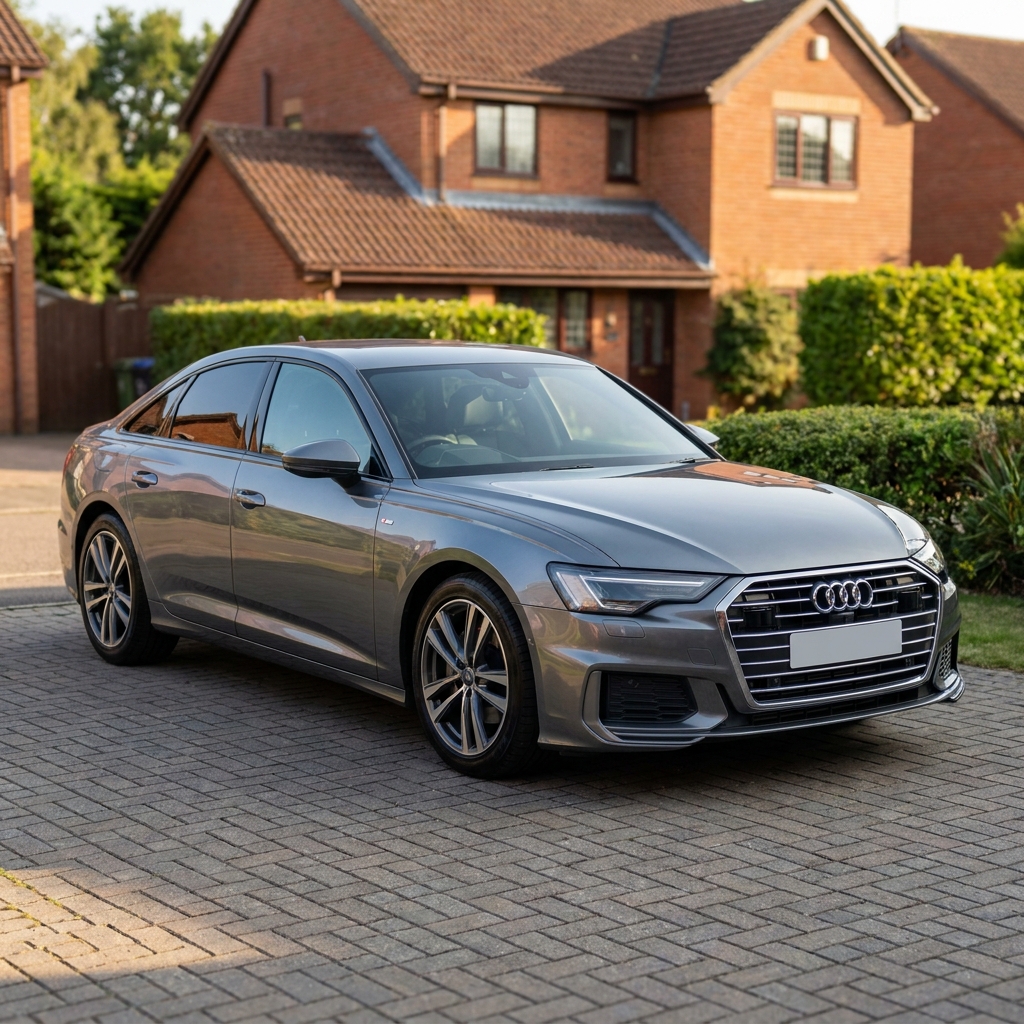
As a limited company director in the UK, car finance for your next vehicle can feel like overly complex. Whether the car is purely for business, which let's face it, it rarely is, or a bit of a business and personal, understanding the various finance options available to your limited company is crucial. This guide will help you explore how to fund your next car, considering the implications for both you and your business.
Your Car Finance Options as a Limited Company Director
When it comes to financing a car through your limited company, the primary options generally mirror those available to individuals, but with different tax and accounting considerations. The most common products you'll encounter are Hire Purchase (HP), Personal Contract Purchase (PCP), and Lease Purchase. Each has distinct features that can appeal to different business needs and personal preferences. There's also business contract hire, and personal leasing to consider, but we'll deal with them in a separate guide.
Hire Purchase (HP) for Limited Companies
Hire Purchase is a straightforward way for your limited company to acquire a vehicle. Essentially, your company hires the car over an agreed period, making fixed monthly payments. Once all payments are made, the company owns the vehicle. This method, which can be referred to as asset finance, is often favoured by businesses that intend to keep the car for the long term and want to show it as an asset on their balance sheet.
Ownership: The company owns the vehicle once the final payment is made.
Payments: Fixed monthly payments over the term.
Deposit: Typically requires an initial deposit.
Tax Implications: The company can claim capital allowances on the car's value, and interest can be offset against taxable profits. VAT on the purchase price is generally not recoverable, but VAT on maintenance can be. Vehicles solely for business use like vans have a different tax position.
Note: Always speak to your accountant before making this sort of decision. Many taxes are linked to thresholds so make sure you look at the whole picture.
Personal Contract Purchase (PCP) for Limited Companies
PCP is a popular choice for directors who prefer lower monthly payments and the flexibility to change cars more frequently. With a company PCP, your limited company pays monthly instalments, but these payments cover the depreciation of the car over the contract term, not its full value. At the end of the agreement, your company has three options:
Return the car: Hand the car back to the finance provider (subject to mileage and condition agreements).
Buy the car: Pay the optional final "balloon" payment to own the vehicle.
Part-exchange: Use any equity in the car (if its market value is higher than the optional final payment) towards a deposit on a new vehicle.
While often called "PCP for Limited Companies," it's important to note that many finance providers structure these agreements as HP with a balloon payment when dealing with limited companies, offering similar flexibility. This allows the company to benefit from the tax advantages of HP while enjoying lower monthly outgoings.
You can learn more about PCP Car Finance Explained or use our PCP Car Finance Calculator to see how payments might look.
Lease Purchase for Limited Companies
Lease Purchase is similar to HP but always includes a large balloon payment at the end of the term. Unlike PCP, there's no option to return the car; your company is committed to making that final payment to take ownership. This option typically offers even lower monthly payments than HP, as a significant portion of the cost is deferred. It's often suitable for companies that are confident in their ability to make the final payment or plan to sell the vehicle at the end of the term to cover it.
Ownership: The company owns the vehicle after the final balloon payment.
Payments: Lower fixed monthly payments with a mandatory large final payment.
Tax Implications: Similar to HP, with capital allowances and interest offset.
Company Car vs. Director's Personal Car: Tax Implications
One of the most significant considerations for limited company directors is whether the car is treated as a company asset or a personal vehicle. This distinction has considerable tax implications for both the company and the director.
Company Car (Owned or Financed by the Company)
If the limited company finances and owns the car, it's considered a company car. While this can offer benefits to the company, such as claiming capital allowances and offsetting interest, the director will likely face a Benefit-in-Kind (BIK) tax charge if they use the car for personal journeys. The BIK rate depends on the car's CO2 emissions and its P11D value (list price including VAT, delivery, and any accessories).
Electric vehicles (EVs) currently have very low BIK rates, making them an attractive option for company cars. This is a key reason why many directors finance electric models as company vehicles.
New and pre-registered vehicles electric vehicles also qualify for 100% capital allowances. This means you can offset the full price of the vehicle against your annual corporation tax bill. So a £60k car could reduce your corporation tax bill by £15,000 if you are paying the 25% rate for this tax year.
Director's Personal Car (Financed Personally, Reimbursed by Company)
Alternatively, a director can finance a car personally and then claim mileage expenses from the company for business journeys. HMRC sets approved mileage allowance payments (AMAPs) which are currently 45p per mile for the first 10,000 miles and 25p per mile thereafter. This approach avoids BIK charges for the director and can be simpler from an accounting perspective, particularly if business mileage is low.
Here's a simplified comparison:
Feature | Company Car (Financed by Company) | Director's Personal Car (Mileage Claim) |
|---|---|---|
Ownership | Company asset | Director's personal asset |
Finance Payments | Paid by company | Paid by director |
Tax for Company | Capital allowances, interest offset | Mileage expense deduction |
Tax for Director | Benefit-in-Kind (BIK) tax if personal use | No BIK, tax-free mileage allowance |
VAT on Purchase | Generally not recoverable (unless 100% business use) | Not applicable |
VAT on Fuel/Maintenance | Recoverable if 100% business use, or if fuel scale charge applied | Not applicable (covered by mileage allowance) |
Comparing Finance Products for Limited Companies
Choosing the right finance product depends on your company's cash flow, desire for ownership, and how frequently you wish to update your vehicle. Here's a quick overview to help you decide:
Finance Product | Ownership | Monthly Payments | Flexibility at End | Typical Use Case |
|---|---|---|---|---|
Hire Purchase (HP) | Yes (after final payment) | Higher | Lots (you own it) | Long-term ownership, balance sheet asset |
PCP (or HP with Balloon) | Optional (after balloon) | Lower | Return, buy, or part-exchange | Frequent upgrades, lower monthly costs |
Lease Purchase | Yes (after balloon) | Lowest | Must pay balloon | Lower monthly costs, definite ownership goal |
For high-net-worth individuals and directors, HP with a balloon payment is a popular option as it combines the benefits of ownership with lower monthly outgoings, similar to PCP but often structured directly for company acquisition. This is often used for very high value cars with low depreciation like a Porsche 911 or an older Ferrari or Lamborghini Urus.
How Prefinance Can Help Your Limited Company
Prefinance is a UK car finance comparison service, designed to help limited company directors and individuals find competitive finance deals. We work with specialist finance brokers who understand the nuances of company car finance and can offer rates from 7.9% APR (representative APR 8.9%). Typically company rates are more variable, with some even lower rates available for balances over £250k.
We are not a broker or a lender ourselves, but rather a comparison and savings tool. By using Prefinance, you can:
Compare Options: Easily compare PCP, HP, and Lease Purchase options tailored for limited companies.
Access Specialist Brokers: Connect with brokers who have expertise in company car finance and access to a wide panel of lenders.
Save Time and Money: Avoid the hassle of approaching multiple lenders directly and potentially secure a more favourable rate.
Whether you're looking for prestige car finance for an executive vehicle, considering a Range Rover PCP finance deal, or exploring options for a Lamborghini, Prefinance can help you navigate the market.
Next Steps for Your Limited Company Car Finance
Choosing the right car finance for your limited company involves careful consideration of your business needs, personal usage, and tax implications. By understanding the differences between HP, PCP, and Lease Purchase, and weighing up the benefits of a company car versus a personal car with mileage claims, you can make an informed decision.
Ready to explore your options? Use Prefinance's comparison service to get quotes from specialist brokers and find the best car finance deal for your limited company. It's a straightforward way to compare rates and secure the funding for your next vehicle.
As always, speak to your accountant to make sure your vehicle finance fits in with your overall tax planning.