
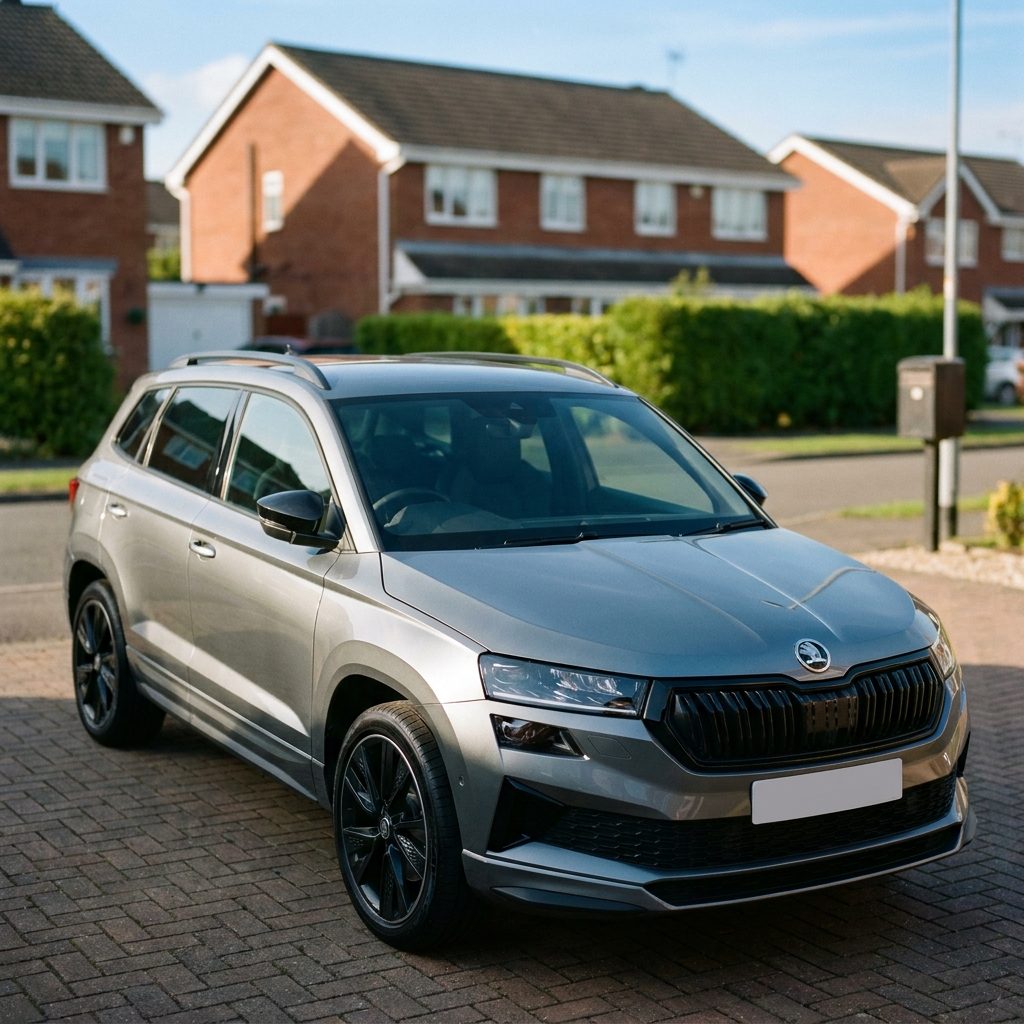
Skoda Karoq Finance Calculator & Pricing
The Karoq finance figures a dealer's quoted to you deserve a proper look before you take them at face value. On its own, a monthly number doesn't tell you much; it only becomes useful once it's been compared against a genuine alternative.
That's the comparison Prefinance runs for you. Point us at the exact Karoq you've found, and we'll set the dealer's own finance example against the sharpest rate our broker panel can currently put together for that kind of car. Do that, and the average saving comes out at up to 30% versus dealer finance; built from a wide spread of deals rather than a promise tied to any one of them, and the dealer in front of you may already be pricing fairly.
The figures and rates seen below are accurate as of publication and can change.
Skoda Karoq finance examples
Vehicle | Cash price | Deposit | Amount of credit | Term | Rep. APR | Monthly payment | GFV / Final payment | Monthly saving vs dealer | Finance type* |
|---|---|---|---|---|---|---|---|---|---|
2025 Karoq 1.5 TSI ACT SportLine Edition DSG, 1,944 miles (quoted 9 Sep 2026) | £26,995 | £2,700 | £24,295 | 48 months | 8.9% | £369.51 | GFV £13,478 | £45.37 | PCP |
2024 Karoq 1.5 TSI Sportline (quoted 9 Aug 2026) | £22,499 | £3,900 | £18,599 | 48 months | 8.9% | £237.70 | GFV £12,847.50 | £37.28 | PCP |
2022 Karoq 1.5 TSI Sportline, 22,664 miles (quoted 30 Nov 2025) | £22,500 | £3,500 | £19,000 | 48 months | 8.9% | £256.60 | GFV £12,352.50 | £36.10 | PCP |
2022 Karoq 1.5 TSI Sportline, 22,664 miles (quoted 30 Nov 2025) | £22,500 | £2,250 | £20,250 | 48 months | 8.9% | £288.00 | GFV £12,352.50 | £31.44 | PCP |
PCP versus HP on a Karoq — what's the actual difference?
Both count as hire purchase in the eyes of the law; the car isn't registered to you until the final payment goes through, whichever agreement you sign. What separates them is how the total cost gets split up. HP takes the full price, minus your deposit, and divides it evenly across every month of the term, so you're paying toward ownership from the very first payment. PCP, which is what all four examples above use, instead sets aside a slice of the price as a Guaranteed (Minimum) Future Value, only due if you decide to keep the car at the end; that's what keeps the monthly figure lower than an equivalent HP deal would.
Either way, Prefinance's instant comparison rests on one shared assumption: that the lender you're matched with would set the same GFV the dealer did. That's not guaranteed, so treat the monthly payment shown as a close estimate rather than a fixed number.
How does Prefinance work out your savings figure?
Give us the car — a registration number works, so does a make and model, or paste in a link from a dealer site or somewhere like Autotrader, provided that listing shows a finance example. We take the dealer's own quote and set it against the strongest rate our broker panel has for that class of vehicle. That comparison assumes you'd land the panel's best rate, which comes down to your own credit standing, and that the dealer selling the car is FCA authorised. Every comparison you run stays saved to your account, so there's no need to redo one later.
Representative APR is the rate at least 51 in every 100 customers a lender approves actually receive, or better, a regulatory yardstick rather than a headline number chosen to look good. What you'd personally save comes down to your own car and circumstances. Commission plays a part as well: both dealers and brokers get paid for putting finance together, which is a genuine reason two near-identical Karoqs can carry different rates at different dealers, and that gap is largely what our comparison brings into the open.
What actually shifts the rate you're offered?
Credit score does most of the heavy lifting, but deposit size and the car's age both move the number too, as the table shows; the two identical Sportline rows make that obvious, with £1,250 less deposit adding over £31 to the monthly payment on an identical car. A longer term usually brings the monthly cost down, though the total interest paid climbs. One thing worth keeping in mind: dealers and brokers both earn commission for arranging finance, which helps explain why two nearly identical Karoqs can be priced differently at different dealerships, and surfacing that gap is a large part of the point of running a comparison.
Worth checking before you apply
Make sure the deposit and mileage in your comparison match what the dealer's actually quoting — the deposit's editable, but get anything else wrong and the result skews.
If you're weighing a bigger deposit against a smaller one on the same car, look at how much it actually moves the monthly payment, not just whether you can afford to put more down.
Ask what happens to your monthly payment if your matched lender's GFV comes in different from the dealer's — don't take it for granted that it'll match exactly.
Read the broker's full representative example before signing anything — it holds the real figures for your deal, not the illustrative ones shown here.
If the same car appears more than once with a different deposit or monthly figure, check both listings on the vehicle's own page before deciding which one is current.
None of this tells you upfront whether the dealer's Karoq quote in front of you is already a fair one; sometimes it is. Running the comparison on your specific car is the only way to know for certain where potential savings can be made.